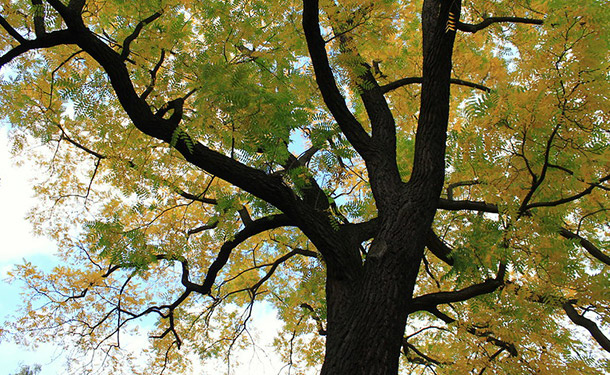
How Can You Tell How Old a Tree Is?

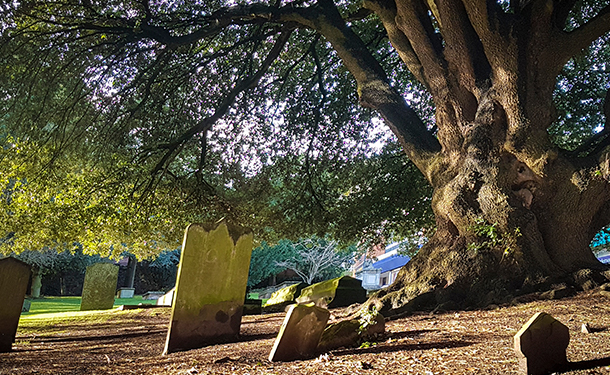
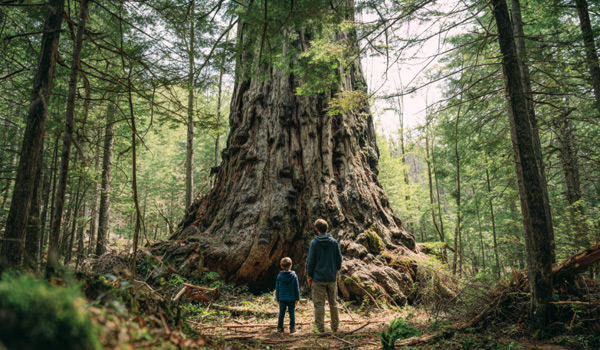
Standing before an ancient oak in your yard or encountering a towering pine in the woods, you’ve probably wondered before about the age of a tree. The good news is determining a tree’s age doesn’t require cutting it down or causing any harm to the living tree.
how can you tell how old is a tree

Whether you’re curious about that maple you planted years ago or trying to estimate the age of a centuries-old specimen, scientists and arborists have developed several reliable methods to figure out how old trees are. From quick estimates using a simple measuring tape to precise techniques that count individual tree rings, these approaches can help you unlock the secrets hidden within any tree trunk.

In this tree care guide, we’ll walk you through six proven methods for determining tree age, ranging from basic techniques that anyone can use to advanced methods employed by professional researchers studying the world’s oldest trees.

Quick Overview to Determine Tree Age Without Cutting

The fastest way to estimate a tree’s age without harming the living tree involves measuring its circumference and applying some basic mathematics. This non-destructive approach works particularly well for temperate climate trees and provides a reasonable, approximate age for most species.

The Measuring Tape Circumference Method

The most accessible technique requires only a measuring tape and can be completed in just minutes. Here’s the process:

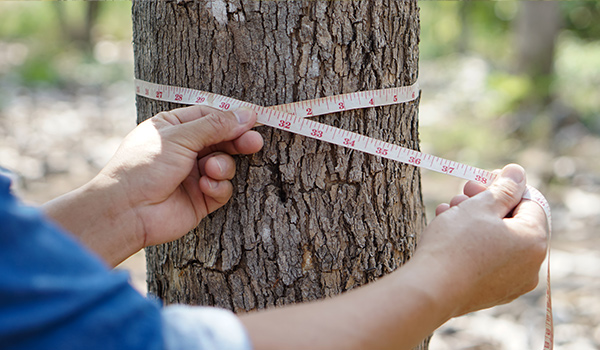
Step 1: Wrap your measuring tape around the tree trunk at exactly 4.5 feet above ground level (this standard height is referred to as “diameter at breast height” or DBH).

Step 2: Record the circumference measurement in inches (the perimeter around the tree).

Step 3: Divide this circumference by 3.14 (pi) to calculate the diameter.

Step 4: Multiply the diameter by the appropriate growth factor for your tree species.

For example, if you measure a Big Leaf Maple with a circumference of 113 inches:

  • Circumference = 113 inches
  • Diameter = 113 (circumference) ÷ 3.14 (pi)  = 36 inches in diameter
  • Age estimate = 36 × 4.7 (growth factor of Big Leaf Maple species) = 170 years (estimated age)

The Increment Borer Technique
the increment borer technique precise annual ring counting

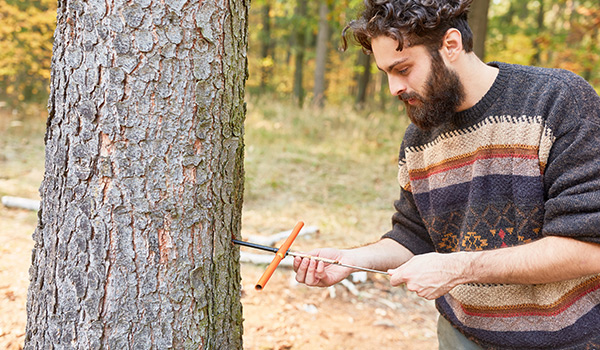
Professional arborists use a specialized tool called an increment borer to extract a pencil-thin core sample from living trees. This method enables precise ring counting without causing significant harm to the tree. The tool creates a small hole that allows the tree to heal easily, making it an excellent option when accuracy is crucial.

Mitchell’s Rule for Quick Estimates

For a rapid assessment, Mitchell’s Rule provides a rough estimate by dividing the measured circumference in centimeters by 2.5. While this method carries significant variance and shouldn’t be used for scientific purposes, it offers a quick ballpark figure for casual curiosity.

The Circumference Method Step-by-Step

Let’s dive deeper into the most practical method for determining tree age that anyone can use with basic tools.

What You’ll Need

  • Flexible measuring tape (at least 10 feet long)
  • Calculator or smartphone
  • Growth factor chart for your tree species
  • Notebook to record measurements

Detailed Process

Measure at the correct height: Position your measuring tape exactly 4.5 feet above the ground level. This standardized height ensures consistency across different measurements and accounts for root flare at the tree’s base.

Wrap the tape properly: Ensure the measuring tape lies flat against the tree’s trunk without gaps or overlaps. The tape should be snug but not tight enough to compress any bark.
circumference measuring tape method for knowing tree age

Record your measurement: Note the circumference in inches. If working in centimeters, be sure to use the appropriate growth factors for metric measurements.

Calculate the diameter: Divide your circumference measurement by 3.14 to determine the tree’s diameter at breast height.

Apply the growth factor: Multiply the diameter by the species-specific growth factor to estimate the tree’s age in years.

Important Considerations

This method is most effective for single-trunk trees growing in typical conditions. Trees with multiple trunks, significant lean, or unusual growing conditions may require adjusted techniques or professional assessment.

Understanding Growth Factors by Tree Species

Growth factors represent the average number of years it takes for a tree species to add one inch to its diameter under normal growing conditions. These empirical values are derived from decades of research on how various trees grow over time.

Common Growth Factors

Tree Species Growth Factor Typical Environment
Big Leaf Maple 4.7 Moist, temperate forests
Pine trees (general) 5.0 Various soil types
Douglas Firs 4.5-5.5 Pacific Northwest
Oak trees 3.0-5.0 Varies by species and conditions
American Elm 4.0 Rich, moist soils
White Pine 5.0 Well-drained soils

Factors Affecting Growth Rates

Environmental conditions significantly impact the rate of tree growth. Trees in ideal conditions with adequate water, nutrients, and sunlight will have lower growth factors (faster growth), while those in stressful environments will have higher factors.

Urban versus forest trees typically show different growth patterns. City trees often face pollution, compacted soil, and limited root space, resulting in slower growth rates than their forest counterparts.

Age-related changes also affect accuracy. Young trees generally produce wider rings and grow faster than mature specimens, which may slow their growth rate as they age.

Tree Ring Analysis for Precise Age Determination

Tree ring analysis, known scientifically as dendrochronology, represents the gold standard for determining tree age with remarkable precision. This method works exceptionally well for trees in temperate climates where distinct growing seasons create visible annual rings.
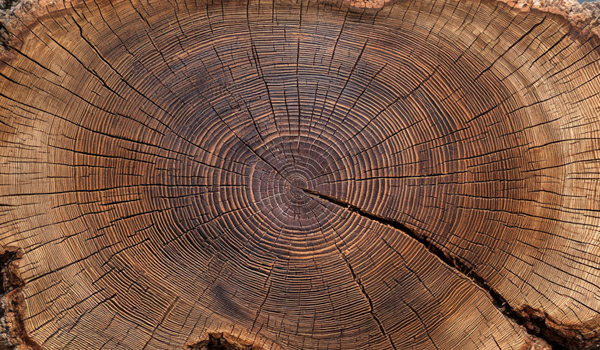
tree ring analysis dendrochronology

Understanding Tree Ring Formation

Each year, trees produce new growth in two distinct phases:

Early summer growth creates light-colored wood (earlywood) when the tree grows rapidly during spring and early summer, with abundant moisture and warm temperatures.

Late summer growth forms dark rings (latewood) as growth slows toward fall when conditions become less favorable.

Together, one light ring and one dark ring represent exactly one year of the tree’s life, allowing scientists to count the rings and determine the precise age of the tree.

Using an Increment Borer

Professional foresters use a tool called an increment borer to extract core samples from living trees without causing significant damage. This specialized tool:

  • Creates a small hole (typically 5mm in diameter) in the tree trunk
  • Extracts a continuous core sample from the bark to the center
  • Allows for ring counting under magnification
  • Leaves a wound that trees readily heal over time

The extracted core sample displays the complete ring pattern, allowing for accurate age determination and providing insight into the tree’s growth history.

Challenges with Ring Counting

Several factors can complicate accurate ring counts:

False rings occur when trees experience more than one ring formation in a single year due to drought followed by renewed growth, making some years appear to have multiple rings.

Missing rings happen during extremely stressful years when trees may fail to produce visible growth, particularly during severe drought, fire damage, or insect outbreaks.

challenges with tree ring counting

Unclear ring boundaries can make counting difficult, especially in tropical regions where trees may not exhibit distinct wet and dry seasons, resulting in unclear annual patterns.

Cross-dating techniques help resolve these issues by comparing ring patterns from multiple trees in the same area to identify and correct for missing or false rings.

Environmental Factors Affecting Tree Age Estimates

Understanding how environmental conditions influence tree growth helps explain why age estimates can vary significantly and why growth factors require local adjustment.

Climate Impact on Ring Formation

Favorable years result in wider rings when trees experience optimal growing conditions, characterized by adequate rainfall, warm temperatures, and sufficient nutrients. These years result in more substantial diameter growth.

Stressful years create narrow rings during periods of drought, extreme cold, or poor growing conditions. Trees may exhibit minimal growth or, in extreme cases, may even have missing rings entirely.

Seasonal patterns affect ring characteristics differently across regions. Trees in areas with pronounced wet and dry seasons typically show more distinct ring boundaries than those in consistently humid climates.

Site-Specific Factors

Soil quality dramatically influences growth rate. Trees in rich, well-drained soils grow faster than those in poor, compacted, or waterlogged soils, which affects the accuracy of standard growth factor calculations.

Competition and spacing impact individual tree growth. Trees growing in dense forests compete for light and nutrients, resulting in slower growth rates compared to isolated specimens with abundant resources.

Urban stress factors, including pollution, restricted root zones, and heat island effects, typically slow tree growth compared to natural forest conditions, making standard growth factors less reliable for city trees.
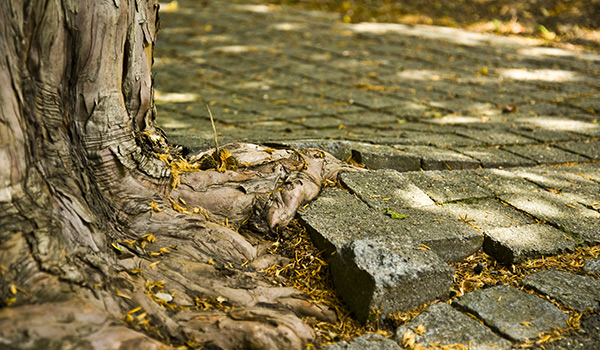
urban tree restricted roots sidewalk

Age-Related Growth Changes

Young trees typically establish quickly and produce wider rings during their first few decades of life. As trees mature, their growth rate generally slows, and ring width decreases even under optimal conditions.

Very old trees may show periods of suppressed growth during their youth when growing under forest canopy, followed by rapid growth spurts when light conditions improve, creating complex ring patterns that require expert interpretation.

Alternative Methods for Special Cases

When standard circumference measurements or ring counting prove inadequate, several alternative approaches can help determine tree age.

Historical Records and Documentation

Planted trees in urban areas, parks, or landscaped properties often have planting records that provide exact establishment dates. Municipal forestry departments, landscape architects, or property owners may maintain documentation showing when trees were planted.

Photographic evidence can help establish minimum ages by comparing historical photographs with current tree size, though this method requires careful interpretation of growth rates over time.

Radiocarbon Dating

For ancient specimens or trees in tropical regions where ring counting proves unreliable, radiocarbon dating offers an alternative approach. This method works by:

  • Measuring the ratio of radiocarbon (carbon-14) to stable carbon in wood samples
  • Comparing these ratios to established calibration curves
  • Providing age estimates for wood up to 55,000 years old

Radiocarbon dating proves particularly valuable for tropical trees that may produce multiple rings annually or lack clear ring boundaries due to consistent growing conditions throughout the year.

Growth Rate Extrapolation

Sequential measurements over several years can establish individual tree growth rates for specimens with unusual growth patterns. By measuring the diameter of the same tree annually, researchers can calculate specific growth factors rather than relying on species averages.

Dendrochronological databases contain extensive records of ring patterns from different regions, allowing comparison with problem samples to determine age through pattern matching rather than simple ring counting.

Professional Assessment

Large, historic, or valuable trees often merit expert evaluation combining multiple methods. Professional arborists may use:

  • Multiple core samples from different sides of the tree
  • Comparison with regional growth databases
  • Analysis of environmental factors affecting local growth rates
  • Integration of historical records with scientific measurements

Notable Ancient Trees and Their Ages

Understanding the longevity potential of different tree species provides context for age estimation efforts and highlights the remarkable lifespans some trees achieve.

Record-Breaking Specimens
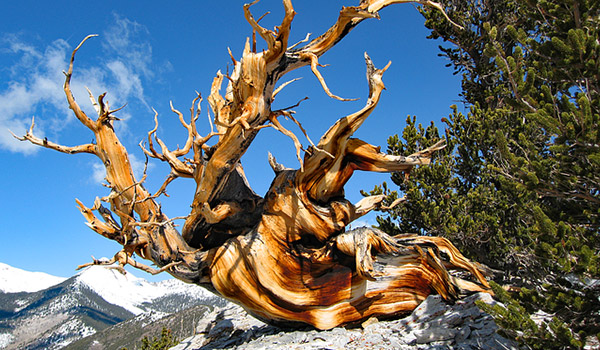
oldest tree ever scientifically verified

Bristlecone pine holds the record for the oldest tree ever scientifically verified. A specimen called “Prometheus” lived for 4,862 years before being cut down in 1964 for research purposes. Another bristlecone pine, nicknamed “Methuselah,” has been dated to 4,849 years old and continues to grow in California’s White Mountains.

Coast redwoods can achieve extraordinary ages, with some specimens reaching over 4,000 years. These giants combine longevity with massive size, making them among the most impressive trees in the world.

Nootka cypress specimens in the Pacific Northwest have exceeded 1,800 years, demonstrating that extreme longevity isn’t limited to California’s famous ancient trees.

Species-Specific Longevity

Douglas firs rarely exceed 1,350 years maximum lifespan, though most are harvested far younger for timber. These trees represent important components of Pacific Northwest forests.

Western redcedars can grow to impressive sizes and ages, but their tendency toward heartwood rot often makes accurate age determination challenging using ring-counting methods.

Oak trees vary widely in longevity depending on species, with some living several hundred years while maintaining active growth throughout their extended lifespans.

Implications for Age Estimation

These examples demonstrate why species identification remains crucial for accurate age estimation. A 200-year-old oak represents a mature but not ancient specimen, while a 200-year-old pine might be approaching its natural lifespan.

Understanding typical longevity also helps evaluate the reasonableness of age estimates. Suppose your calculations suggest a backyard maple is 500 years old. In that case, you’ll want to double-check your measurements and growth factors, as this would represent an exceptionally ancient specimen for most maple species.

When to Use Each Method

Choosing the appropriate technique for determining a tree’s age depends on your specific situation, the required accuracy, and the available resources.

Use the circumference method when you need a quick estimate for living trees, lack specialized equipment, or want to assess multiple trees efficiently. This approach works well for general curiosity, basic forestry assessments, or educational purposes.

Choose increment boring when you need precise age determination for valuable specimens, scientific research, or professional forestry decisions. This method provides the highest accuracy for temperate climate trees while minimizing damage to living trees.

Consider alternative methods when dealing with tropical trees, very ancient specimens, or trees with unclear ring patterns. Professional assessment becomes essential for historically significant or extremely valuable trees.

Combine multiple approaches for the most reliable results, especially when dealing with unusual specimens or when high accuracy is required for research or management decisions.

The short answer to determining tree age lies in matching your method to your needs: circumference measurements for quick estimates, ring analysis for precision, and professional assessment for special cases.

Understanding how to tell a tree’s age opens up fascinating insights into the natural world around us. Whether you’re examining trees in your yard, exploring ancient forests, or simply satisfying your curiosity about these remarkable living organisms, these methods provide reliable approaches to unlock the secrets held within every tree trunk.

Remember that trees represent living history, with some specimens witnessing centuries or millennia of environmental change. By learning to estimate their ages accurately, we gain deeper appreciation for these silent witnesses to the passage of time and the importance of preserving both individual specimens and entire forest ecosystems for future generations.
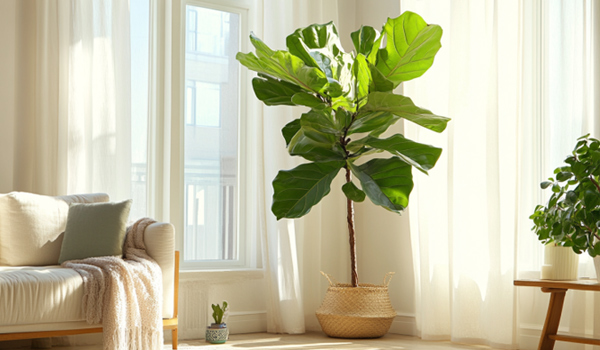
Fiddle Leaf Fig Tree Care

Looking for insight and tips about fiddle leaf fig tree care? Learn the essentials like the proper light, water, and problem-solving tips in thetreecareguide.com, and keep your Ficus lyrata (fiddle leaf fig tree) healthy and vibrant with these simple steps.

fiddle leaf fig tree care

Key Takeaways

  • The Ficus lyrata, also referred to as Fiddle-leaf Fig Trees thrive in bright, indirect light and need well-draining potting soil to flourish.
  • Consistent watering, with the top inch of soil drying out between waterings, is crucial to prevent root rot.
  • Regular pruning and repotting support healthy growth while keeping an eye out for pests, which helps maintain plant health.

Light Requirements for Fiddle Leaf Fig Trees

Light significantly influences the healthy growth of fiddle-leaf fig trees. These plants thrive in bright, indirect light and require about six hours of light daily to maintain their lush foliage. Positioning your fiddle leaf fig near a window with plenty of natural light, such as an east-facing window, can provide the ideal light conditions.

However, direct sunlight should be avoided as it can burn the plant’s leaves and cause irreversible damage. If you notice brown or crispy leaves, it could indicate that your plant is exposed to too much direct sunlight. Instead, opt for filtered light or sheer curtains to diffuse the sunlight.

bright room with a fiddle leaf fig tree receiving indirect light

Rotate the plant slightly every few weeks to ensure balanced light exposure. This simple practice will help your plant grow evenly and prevent one side from becoming leggy or sparse. Adequate light exposure is pivotal in maintaining the fiddle leaf fig’s vibrant, glossy leaves.

Fiddle leaf figs can adapt to brighter light conditions but will struggle in low light. If your home doesn’t receive enough natural light, consider using a grow light to supplement. This way, your fiddle leaf fig can flourish and enhance your living space with its striking foliage, creating a bright light environment.

Choosing the Right Potting Soil

Choosing the right potting soil is fundamental for a healthy fiddle leaf fig. These plants need well-draining potting soil that retains moisture without becoming waterlogged. A peat-based soil mixed with perlite or a 50/50 blend of cactus and houseplant soil is ideal for promoting optimal growth. These mixes ensure excellent water retention, breathability, and texture, crucial for the plant’s root health.

Soil pH is another important factor to consider. Fiddle leaf figs thrive best in a soil pH range of 6-7, supporting optimal nutrient absorption and overall plant health. Specialized fiddle leaf fig potting soil offers the necessary nutrients and drainage for optimal plant health.

When choosing a pot, consider the following:

  1. Opt for one that complements your home decor but also meets the plant’s needs.
  2. Clay or earthenware pots are excellent choices as they promote better airflow and prevent water from stagnating.
  3. Ensure that the pot has sufficient drainage holes to prevent problems like root rot, which can occur due to excess water.

Watering Your Fiddle Leaf Fig Tree

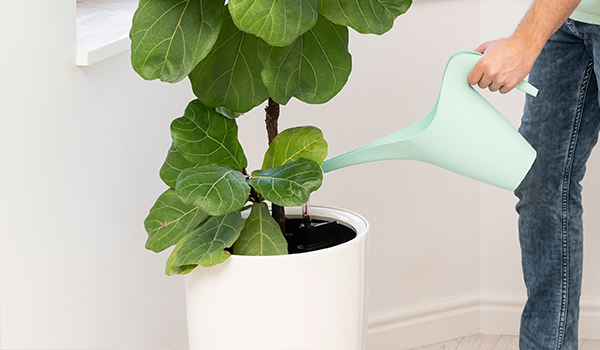
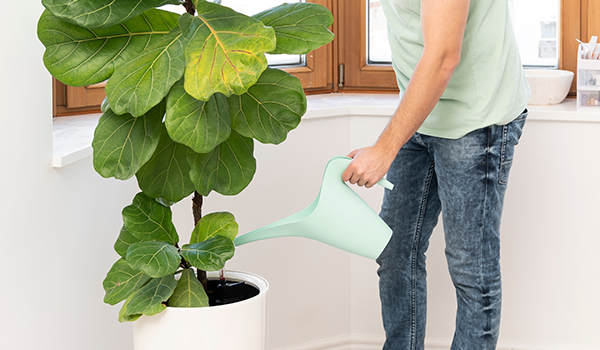
watering a fiddle leaf fig tree

Correct watering is crucial for the health and growth of your fiddle leaf fig tree. These plants prefer their soil to be consistently moist but not waterlogged. Water your fiddle leaf fig when the top inch of soil is dry, typically about once a week or every two weeks. Signs that your plant needs water include droopy foliage and wilting leaves.

Overwatering can be detrimental, leading to root rot and other serious issues. Ensure that the plant drains completely after watering, allowing excess water to escape from the pot’s drainage holes. Flushing the soil monthly until water drains out of the pot can help prevent salt buildup, which can harm the plant.

For self-watering planters, let the reservoir empty completely before refilling. This practice helps prevent excess water from sitting around the roots and causing potential damage. Use filtered or tap water to hydrate your fiddle leaf fig, ensuring it’s free from harmful chemicals.

After watering, allow your fiddle leaf fig to sit in the sink for at least an hour to ensure thorough drainage. Consistent watering helps your fiddle leaf fig thrive, keeping its leaves lush and vibrant.

Temperature and Humidity Needs

Fiddle-leaf fig trees thrive in a temperature range of 60°F to 85°F, making them well-suited for most indoor environments. Avoid placing your fiddle leaf fig near air conditioning units, doors, or vents, as cold drafts can stress the plant. Consistent temperatures will help your fiddle leaf fig maintain its health and growth.

Humidity is also crucial for fiddle leaf figs. These plants prefer humidity levels between 30% to 65%. In the winter months, when indoor air tends to dry out, using a humidifier can help maintain the necessary humidity levels for your fiddle leaf fig. Good air circulation is also essential, as it prevents issues related to humidity and helps the plant thrive.

To keep your fiddle leaf fig comfortable, avoid placing it in drafty areas and ensure it has access to adequate air circulation. These measures help create an environment that mimics the plant’s native tropical habitat, promoting healthy growth and vibrant foliage.

Fertilizing Fiddle Leaf Fig Trees

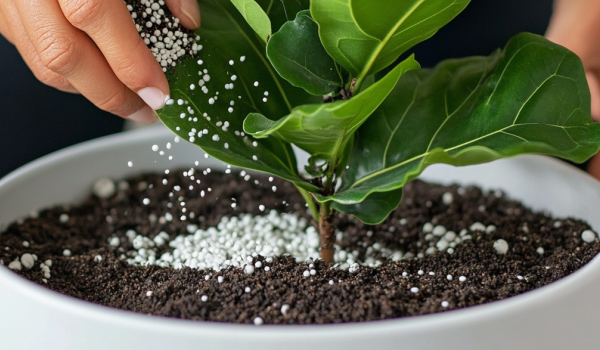
fertilizing a fiddle leaf fig plant in a pot

Fertilization supports the growth and overall health of your fiddle leaf fig tree. These plants have large, dense leaves that require significant nutrients, making consistent fertilization necessary. Fertilize fiddle leaf figs monthly during the growing season, typically from spring through summer.

When choosing a fertilizer, look for one with an NPK ratio of 16-5-11, as this provides a balanced supply of nutrients that fiddle leaf figs need to thrive. Liquid fertilizers are particularly effective, allowing for easier control over nutrient delivery compared to slow-release granules. A common recommendation is to mix one teaspoon of liquid fertilizer per cup of water for optimal results.

If you’ve recently repotted your fiddle leaf fig, wait about a month before starting a regular fertilization routine to minimize root shock and allow the plant to acclimate to its new potting soil. Following these fertilization tips ensures your fiddle leaf fig remains healthy and vibrant throughout the growing season.

Pruning and Shaping Fiddle Leaf Figs

Pruning and shaping are important for maintaining the health and appearance of your fiddle leaf fig tree. The best time to prune is in late spring or summer when the plant is in its active growth phase. Using a small pair of pruning shears, make cuts at a 45-degree angle to encourage healthy growth and prevent damage to the plant.

When pruning, top the main trunk above a leaf node to encourage branching and a fuller appearance. This practice stimulates new growth and helps create a more balanced and attractive shape. Some growers prefer a tree-like appearance with a branched canopy, achieved through regular pruning.

Always wear gloves when pruning to protect your skin from the white, milky sap that is excreted when the plant is cut. Removing dead leaves at any time helps maintain the plant’s health and prevent potential pest issues. Regular pruning and shaping keep your fiddle leaf fig looking its best and promote vigorous growth.

Propagation Techniques

Propagating fiddle leaf figs can be a fun and rewarding way to expand your plant collection. There are three primary methods for propagating these plants: stem cuttings in soil, cuttings in water, and air-layering. The ideal time for propagating is during late spring to early summer when conditions are warm and bright.

For soil propagation, prepare a 6-inch stem cutting with 2-4 nodes, cutting at a 45-degree angle. Ensure your tools are sterilized to prevent the introduction of diseases. Keep the cutting in a covered environment to maintain humidity and encourage root growth.

Water propagation involves placing the cutting in water and monitoring it weekly for root development, which typically takes around six weeks.

Air-layering requires making an incision around a branch’s outer tissue and covering it with damp sphagnum moss to promote root growth. Once roots develop, the branch can be cut and potted in soil for further growth. Each method has its benefits, so choose the one that best fits your needs and resources.

Repotting and Pot Maintenance

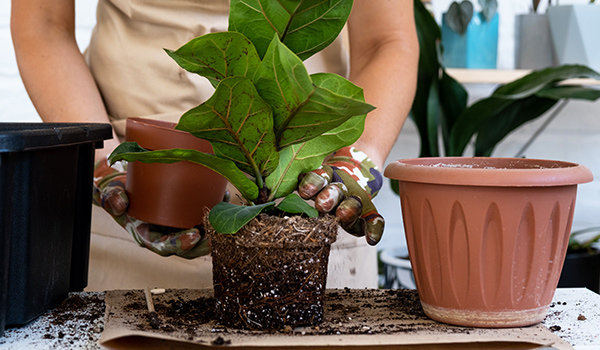
repotting fiddle leaf fig tree

Repotting is an essential part of fiddle leaf fig care, especially for young plants. Young fiddle leaf figs should be repotted annually every spring, while mature plants can have the top several inches of soil removed and replaced with fresh soil. This ensures the plant has access to new nutrients and room for root growth.

When repotting, choose a pot that is 3-4 inches wider in diameter than the current pot. Clay or earthenware pots are ideal as they provide better airflow and prevent water from stagnating. Make sure the pot has adequate drainage holes to avoid root rot and other issues that can arise from excess water.

After repotting, wait about a month before resuming fertilization to minimize root shock. Proper pot maintenance and repotting practices help your fiddle leaf fig thrive and continue to grow healthily.

Common Pests and Diseases

Fiddle-leaf fig trees can be susceptible to various pests and diseases. Common pests include:

  • spider mites
  • scale insects
  • mealy bugs
  • aphids
  • thrips
  • fiddle leaf fig plant

These pests can cause significant damage if not addressed promptly. Adequate air circulation and a good watering plan help prevent pest problems.

Neem oil is a recommended treatment for many pests. It works by being absorbed into the plant’s system, poisoning pests effectively. However, caution should be taken to avoid overuse, as it can weaken plants and cause discoloration. Regular checks and preventive treatments keep your fiddle leaf fig free from pests and diseases.

In addition to pests, fiddle leaf figs can suffer from bacterial infections. Maintaining a clean environment and promptly removing affected leaves can help prevent the spread of disease. Staying vigilant and addressing issues early before they become major will help keep your fiddle leaf fig healthy and thriving.

Troubleshooting Common Issues

Despite the best care, fiddle leaf figs can sometimes encounter issues. Signs of inadequate light include droopy leaves and foliage that appear pale or spotty. Excessive direct sunlight may cause light brown or bleached spots on the leaves. Relocating the plant to a spot with bright, filtered morning light can help alleviate these problems.

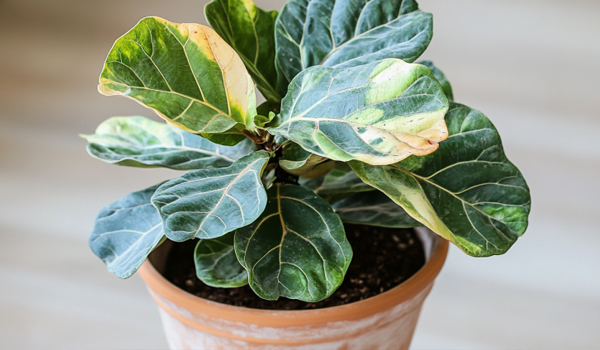
Overwatering is another common issue that can lead to dark spots on leaves and root rot. To prevent this, ensure proper drainage and avoid letting the soil shrink away from the pot’s sides. Leaf loss can also occur if the plant is moved around excessively, so try to keep your fiddle leaf fig in a stable location.

fiddle leaf fig plant discolored signs of damage

Temperature extremes and direct airflow from heating or cooling units can cause leaf discoloration. Ensuring your plant is in a suitable environment with consistent conditions will help prevent these issues and keep your fiddle leaf fig in optimal health.

Additional Care Tips

Consider these additional care tips to maintain the health and vibrancy of your fiddle leaf fig tree. Routine preventive treatments for pests are recommended to keep your plant free from infestations. Grouping plants together can also enhance humidity levels, creating a more favorable environment for your fiddle leaf fig.

Use a damp cloth to gently wipe a few leaves once a month to remove dust and maintain their shine and health. This practice also helps the plant absorb more light. If you notice brown spots on the leaves, it may indicate a need for increased humidity or adjustments in watering practices.

Following these extra tips ensures your fiddle leaf fig remains a stunning and healthy addition to your home.

Fiddle Leaf Fig Care Summary

Caring for a fiddle leaf fig tree involves understanding its specific needs, from light and soil requirements to proper watering, temperature, and humidity control. By following the guidelines on fertilizing, pruning, propagating, and repotting, you can ensure your fiddle leaf fig remains healthy and vibrant. Regular monitoring for pests and diseases and addressing common issues promptly will help maintain your plant’s well-being. Remember, with a bit of patience and attention, your fiddle leaf fig can thrive and become a beautiful, long-lasting addition to your indoor garden.

Frequently Asked Questions

How often should I water my fiddle leaf fig tree?

You should water your fiddle leaf fig when the top inch of soil feels dry, typically once a week or every two weeks. Just keep an eye on it and adjust based on your home’s humidity and temperature!

What kind of light is best for fiddle leaf figs?

Fiddle leaf figs love bright, indirect light and ideally need about six hours of it each day. Make sure to place yours where it can soak up that light without direct sunburn!

Can I use regular potting soil for my fiddle leaf fig?

Regular potting soil isn’t ideal for your fiddle leaf fig; it’s better to go for a peat-based mix with perlite or a blend of cactus and houseplant soil for optimal drainage and nutrients. Your plant will thrive with the right mix!

How do I prevent pests on my fiddle leaf fig?

To keep pests off your fiddle leaf fig, ensure it has good air circulation and follow a consistent watering routine. Don’t hesitate to use neem oil or fungicides if you notice any issues.

Why are the leaves of my fiddle leaf fig turning brown?

Your fiddle leaf fig’s leaves are likely turning brown due to factors like too much direct sunlight, low humidity, or overwatering. Try adjusting its light, increasing humidity, and fine-tuning your watering routine to help it thrive.

For the original version of this article visit: https://www.thetreecareguide.com/fiddle-leaf-fig-tree-care/

Growing a Lemon Tree Indoors

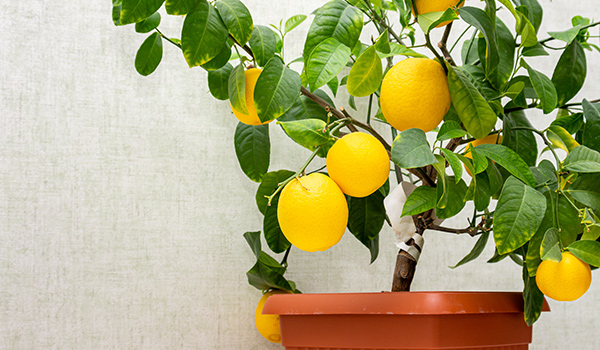
Want to grow a lemon tree indoors? It’s easier than you think. This thetreecareguide.com article will show you everything you need to know, from the best lighting and soil mix to watering, pruning, and dealing with pests. Discover how to keep your indoor lemon tree healthy and productive year-round.

a lemon tree indoors

Key Takeaways

  • Indoor lemon trees need 6-8 hours of sunlight daily; consider using LED grow lights if natural light is insufficient.
  • Proper soil drainage is key; use a mix of sand, peat, and perlite to prevent overwatering and root rot.
  • Regularly monitor humidity levels and manually pollinate flowers indoors for healthy growth and fruit production.

Optimal Light for Indoor Lemon Trees

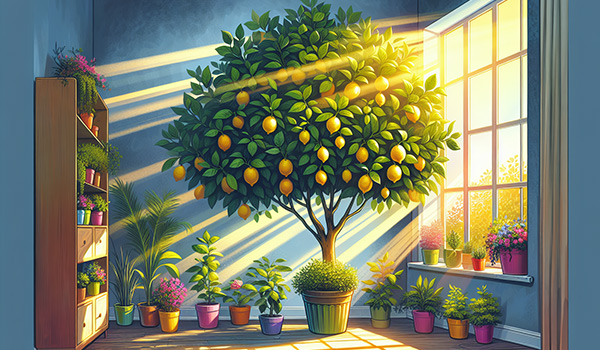
Proper lighting is essential when growing lemon trees indoors. These citrus trees thrive on bright light and require 6-8 hours of direct sunlight daily for optimal growth. The best spot for your indoor lemon tree is near an unobstructed south or southwest-facing window, where it can soak up the sunshine.

bright lemon tree indoors - thriving in natural sunlight

However, not all homes can provide such ideal conditions. If your indoor space lacks sufficient natural sunlight, LED grow lights can be a great alternative, providing adequate light throughout the day. These lights mimic the spectrum of natural sunlight, helping your citrus plants flourish even in dim indoor environments.

Adequate light promotes healthy growth and vibrant fruit production. Light is as crucial as water and nutrients for growing lemon trees indoors.

Choosing the Right Soil Mix

The soil mix you choose plays a pivotal role in the health and productivity of your indoor lemon tree. Citrus trees require a well-draining potting mix to prevent water accumulation around their roots, which can lead to root rot. An ideal mix typically consists of equal parts sand, peat, and perlite or bark, providing the perfect balance of drainage and moisture retention.

A pot with sufficient drainage holes prevents excess water from lingering in the soil. This setup ensures that while the soil remains moist, it never becomes waterlogged, thereby maintaining optimal soil moisture levels for your lemon tree.

Planting in the right soil mix sets the foundation for a thriving indoor lemon tree.

Watering Your Indoor Lemon Tree

Correct watering is crucial for your indoor lemon tree’s health and fruit production. Daily watering may be necessary in summer due to increased temperatures and growth rates. Adjust your watering schedule according to the seasons to maintain optimal soil moisture levels.

Be cautious of overwatering, as indicated by yellowing leaves, which can signal root problems. Ensure the top 3 inches of soil have dried out before watering to prevent overwatering. Using moisture meters or the finger test can help determine the right time to water.

Water thoroughly, allowing water to drain from the bottom of the pot to keep the roots healthy. This technique encourages deep root growth and prevents water from stagnating around the roots.

Maintaining Humidity Levels

Indoor lemon trees thrive in humidity levels above 50%. Typical indoor environments can be quite dry, especially during winter, so maintaining proper humidity levels is vital for your lemon tree’s health. A humidifier or a moisture tray filled with pebbles near your tree can help maintain the necessary humidity. Regular misting of the leaves a few times a week can also keep your tree happy and healthy.

When your lemon tree is indoors full-time in winter, it is crucial to ensure it gets enough humidity to prevent blossom loss and maintain overall health. Keeping the air around your lemon tree moist helps counteract the effects of dry indoor air and supports healthy growth.

Fertilizing Indoor Lemon Trees

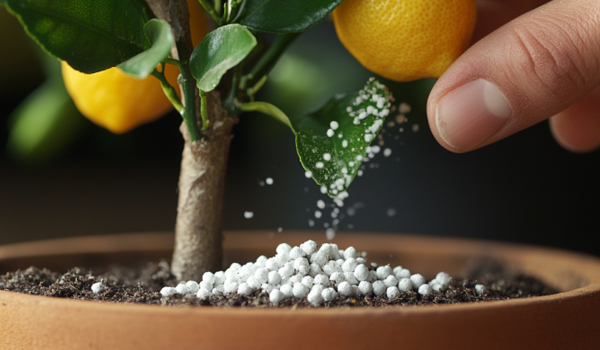
lemon tree being fertilized indoors with balanced fertilizer

Proper fertilization ensures your indoor lemon tree gets the nutrients needed for vigorous growth and fruit production. Citrus trees require a nutrient-rich diet, relying on nitrogen, phosphorus, potassium, and essential micronutrients like zinc and iron. A general-purpose fertilizer or one specially formulated for citrus trees is recommended.

A proper fertilization schedule includes three applications: during early bud break, during fruit swell, and in late summer. However, avoid fertilizing your lemon tree during the winter months to prevent nutrient overload and ensure healthy growth.

This schedule provides your tree with the necessary nutrients to produce vibrant, juicy lemons.

Pruning and Shaping

Pruning maintains the health and shape of your indoor lemon tree. Proper pruning encourages healthy growth and keeps the tree manageable for indoor environments. Prune in late winter or early spring to avoid removing potential fruit.

Focus on minimal pruning, mainly removing thorns and any unwanted shoots. Prune any dead or diseased wood to improve the overall health of your tree. Wearing protective clothing can help prevent scratches from thorns, which are common in some lemon tree varieties.

Regular pruning ensures your tree remains healthy and productive.

Selecting the Best Indoor Lemon Tree Varieties

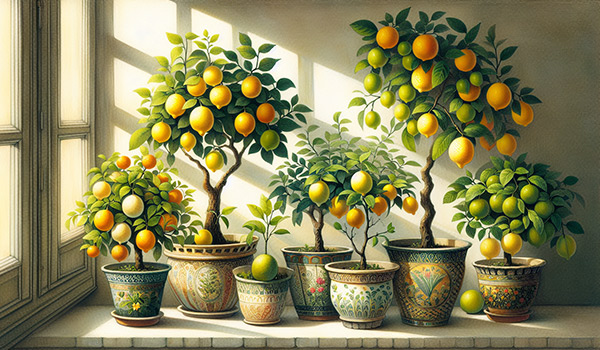
varieties of indoor lemon trees displayed together in pots

Choosing the right variety of lemon trees for indoor growing is crucial. Meyer lemon trees and dwarf varieties like Dwarf Eureka are well-suited for indoor environments. These varieties are known for their compact size and ability to produce fruit in limited space.

Other good choices include the Dwarf Ponderosa and Variegated Eureka Pink lemon, which add a unique aesthetic to your indoor garden. Dwarf lemon trees, Calamondin, and Thai Lime are also excellent options for indoor cultivation. Varieties that produce smaller fruits help conserve the plant’s energy for overall health and fruit production.

Pollination Techniques Indoors

Pollination is necessary for your indoor lemon tree to produce fruit. Since natural pollinators like bees are absent indoors, manual pollination is required. Use a small brush or cotton swab to brush the center of each flower and transfer pollen gently. This process can be done once but may be repeated if needed.

person performing manual pollination techniques on indoor lemon trees

Lightly shaking the branches during blooming can also help with pollination. Fresh air can aid in the pollination process and the overall health of your lemon tree.

These simple techniques will help your indoor lemon tree care bear fruit and produce a bountiful harvest.

Repotting Your Lemon Tree

Repotting your indoor lemon tree is an important part of its care routine. Repot from early spring to mid-summer during the active growth phase. Starting with a small pot helps prevent waterlogging and root rot.

When repotting, choose a pot with a similar depth but a wider diameter to accommodate growth. Gently loosen the root ball before placing it in the new pot to encourage healthy root growth. Proper planting technique ensures the health and productivity of your lemon tree.

Common Pests and Issues

Indoor lemon trees are susceptible to common pests such as:

  • spider mites
  • scale
  • aphids
  • mealybugs

These pests can severely affect their health. Low humidity can lead to pest infestations. Regular inspection and prompt treatment are key to managing these issues.

mealybug pests affecting indoor lemon trees

Symptoms of pest infestations include leaf drop and yellowing leaves. Horticultural oil or insecticidal soap can effectively manage pest problems. If pests are found, isolate the tree and treat it with organic insecticide or soapy water.

These steps will help you grow a lemon tree healthy and thriving. Start by listing how to care for your own lemon tree.

Seasonal Care Tips

Seasonal changes significantly influence the care of indoor lemon trees. Move your lemon tree outdoors to take advantage of natural sunlight in warmer months. Gradually acclimate your tree to its new environment to prevent shock. This process is essential for the tree’s successful adaptation.

Before fall temperatures drop, bring your tree back indoors to protect it from cold damage. Be cautious of sunburn when moving your tree outside, as it can damage the bark and attract pests and diseases.

Adjusting your care routine with the seasons ensures your lemon tree remains healthy year-round.

Lemon Tree Summary

Growing a lemon tree indoors can be a rewarding experience, offering both aesthetic beauty and the joy of harvesting homegrown lemons. From ensuring adequate light and the right soil mix to proper watering, humidity, and fertilization, each step is crucial for the health and productivity of your tree.

You can enjoy a thriving indoor lemon tree by selecting suitable varieties, mastering pollination techniques, and staying vigilant against pests. Embrace the seasonal care tips to adapt to changing conditions and keep your tree flourishing. Start your journey today and relish the satisfaction of growing a lemon tree indoors.

Indoor Lemon Tree Frequently Asked Questions

How much light does an indoor lemon tree need?

Your indoor lemon tree will thrive with about 6-8 hours of bright, direct sunlight daily. Make sure to position it where it can soak up that natural light!

What type of soil is best for an indoor lemon tree?

For your indoor lemon tree, a well-draining citrus potting mix with equal parts sand, peat, and perlite or bark is the way to go. This mix will help keep your tree healthy and thriving!

How often should I water my indoor lemon tree?

You should water your indoor lemon tree daily in the summer, but in other seasons, only when the top 3 inches of soil are dry. This will keep your tree healthy and thriving!

How can I maintain humidity for my indoor lemon tree?

To keep your indoor lemon tree happy, try using a humidifier or placing a pebble-filled moisture tray nearby. Regularly misting the leaves can also help boost humidity and keep your tree thriving!

What are common pests for indoor lemon trees, and how can I manage them?

Indoor lemon trees often face pests like spider mites, scales, aphids, and mealybugs. Regularly inspecting your plants and treating them with horticultural oil or insecticidal soap can keep these nuisances at bay.

For the original version of this article visit: https://www.thetreecareguide.com/growing-a-lemon-tree-indoors/

Large Trees for Large Zone 7 Landscapes

Need help choosing a massive tree species for your large landscape? Knowing which tree species grow to larger proportions will help you fill vast areas of your landscape with shaded recreational areas.

large trees for USDA hardiness zone 7

thetreecareguide.com gathered species, planting, and care information for some of the more massive trees hardy to large zone 7 landscapes.

1. Weeping Willow (Salix babylonica)

weeping willow

Weeping willows are recognized for their long, drooping branches and delicate leaves. They are typically found near fresh-water sources, as they have a strong affinity for moisture and thrive in damp soil. The weeping willow’s growth rate is fast, with new growth appearing each year. They can reach a mature size of 40 to 50 feet in height and spread, with a broad canopy that provides significant shade.

Weeping willows are hardy in USDA zones 6 through 8 and are easy to care for. They require consistent moisture to thrive, so they should be watered regularly. This tree species benefits from fertilization in the spring and pruning in the winter to maintain shape and encourage healthy growth. The weeping willow is a stunning addition to any large landscape and offer a peaceful, calming presence with their gentle sway in the breeze.

2. Ginkgo Biloba (Ginkgo biloba)

Ginkgo Biloba trees or Maidenhair trees are a unique and ancient species that can live for over a thousand years. They are easily recognized by their fan-shaped leaves turning bright yellow in the fall. These trees have a moderate growth rate and can reach a mature size of 80 feet high and a 50-foot spread. They are hardy in USDA zones 3 through 8 and are tolerant of various soil types as long as they are well-drained.

Ginkgo Biloba trees require minimal care and maintenance, ideal for low-maintenance landscapes. They prefer full sun to partial shade and should be watered regularly. They do not require fertilization, but occasional pruning will help maintain their shape and promote healthy growth. Ginkgo Biloba trees are prized for their medicinal properties (the foliage is believed to have beneficial effects on memory and cognition).

3. American Beech (Fagus grandifolia)

American Beech trees are a beautiful and stately deciduous species native to eastern North America. They have a slow to moderate growth rate and can reach a mature size of 70 to 80 feet in height and spread. They are hardy in USDA zones 3 through 9 and prefer well-drained soil rich in organic matter.

Beech trees need minimal care and maintenance once established. They prefer partial shade to full sun and should be watered regularly. They thrive from an annual compost application around the tree’s base. Pruning is typically only necessary to remove dead or diseased branches. Beech trees are highly valued for their attractive foliage, which turns a golden brown in the fall. They are also an important food source for birds and small mammals.

4. Southern Magnolia (Magnolia grandiflora)

southern magnolia grandiflora

Magnolia Grandiflora trees or Bull Bay are a stunning evergreen species native to the southeastern United States. They are known for their immense, fragrant white flowers blooming in the summer and their glossy, leathery leaves remaining green year-round. They have a moderate growth rate and can reach 60 to 80 feet in height and spread at maturity. They are hardy in USDA zones 7 through 9 and prefer well-drained soil rich in organic matter.

Magnolia Grandiflora trees require minimal care and maintenance once established. They prefer full sun to partial shade and should be watered regularly. They do not require fertilization, but occasional pruning will help maintain their shape and promote healthy new growth. Magnolia Grandiflora trees are highly valued for their ornamental beauty and are often used as specimen trees in landscaping.

5. Black Walnut (Juglans nigra)

black walnut tree
Photo by Sue Lowndes

Black walnut trees, or Juglans nigra, are a large and long-lived species native to eastern North America. They are known for their valuable wood and edible nuts, which have a distinctly rich buttery flavor. They have a moderate to fast growth rate and can reach 70 to 100 feet with a 50 to 75-foot spread at maturity. They are hardy in USDA zones 4 through 9 and prefer well-drained, moderately fertile soil.

Black walnut trees require minimal care and maintenance once established. This tree species prefers full sun to partial shade and should be watered regularly. They benefit from an annual compost or organic fertilizer application around the tree’s base. Pruning is typically only necessary for dead or diseased branch removal. Black walnut trees are highly valued for their wood, used for furniture, flooring, and other applications.

Large Trees for Vast Landscapes

In this article, you discovered species, growing, and care information for some of Zone 7’s largest tree varieties for your vast, empty landscape.

Identifying larger trees to help you add dimension and interest to your landscape will give you more shaded areas and potentially increase your home’s curb appeal.

Without larger trees in your landscape, you will have excess barren areas unprotected from the sun’s harsh rays and violent weather.

Sources:
trees.umn.edu/weeping-willow-salix-alba
snr.unl.edu/data/trees/identification/basictree.aspx?sid=65
uky.edu/hort/American-Beech
plants.ces.ncsu.edu/plants/magnolia-grandiflora/
nfs.unl.edu/woody-plants/black-walnut

For the original version of this article visit: https://www.thetreecareguide.com/large-trees-for-zone-7-landscapes/

5 Small Landscape Trees for Tiny Yards

Need help choosing a small tree to plant in your tiny yard? Knowing which tree species remain small will aid you when planning out your limited-space yard.

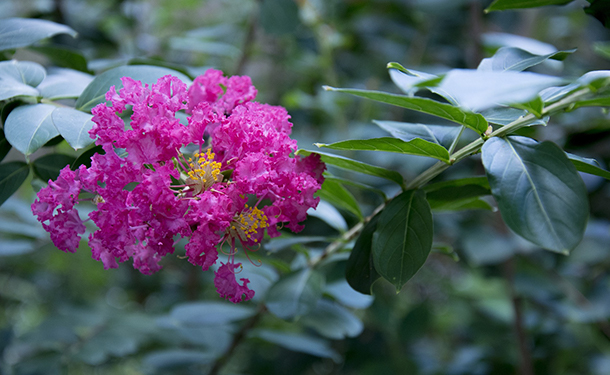
Small landscape trees for tiny yards include flowering crape myrtles

thetreecareguide.com gathered species, planting, and care information for 5 small (understory) trees that won’t cramp or ruin what little space you have in your yard.

Small Tree Species

You can choose a smaller, more compact tree species when you don’t have enough space in your yard for a towering eucalyptus, massive oak, or southern pine. Small, ornamental, or understory trees range in size from 10 to 40 feet and are easier to care for and prune. Consider the following small landscape tree species:

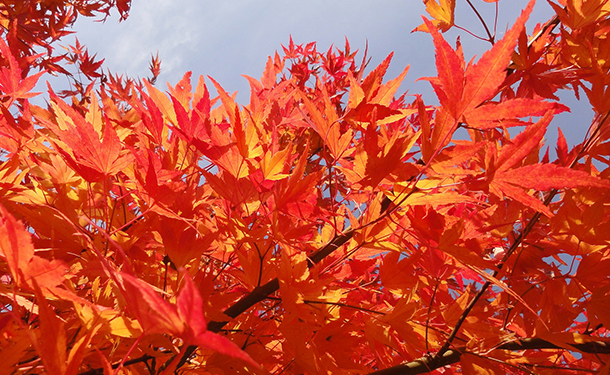
1. Japanese Maple (Acer palmatum)

Small landscape trees for tiny yards include Japanese maples

This tree is typically grown as a small single-stemmed tree or a large multiple-stemmed shrub. Its shape is rounded to broad-rounded, with a layered branching structure. Japanese maples are magnificent specimens or accent trees performing well in a small grouping, privacy screen, or shrub border.

Mature Height – This species reaches 15 to 25 feet, with a 20-foot spread
Hardiness Zone – 5 through 8
Species Type – Deciduous
Features – During fall, maples display an incredible show of autumn color before leaf drop. Then, buds swell in early spring, bringing new foliage in amazing colors that often rival the autumn spectacle.
Care Tip – Always provide a 2 to 3-inch layer of organic mulch around Japanese maple trees (from the trunk to the dripline).

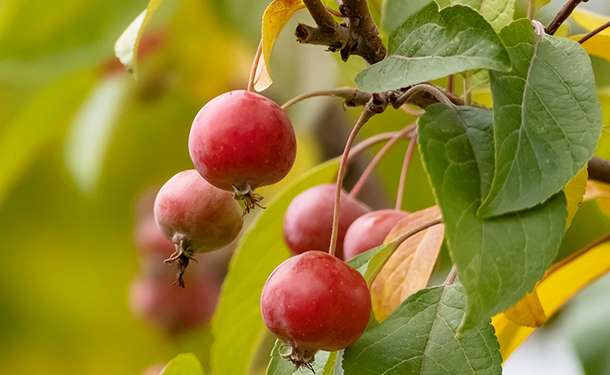
2. Crabapple (Malus)

Small landscape trees for tiny yards include crabapples

Ornamental flowering crabapple trees are valued for their flowers and fruit. The blooms, which emerge before or with the foliage (in the spring), range from white to red. The fruit appears in summer and is less than 2 inches in diameter.

Mature Height – This species reaches 15 to 25 feet, with a 20-foot spread
Hardiness Zone – 4 through 8
Species Type – Deciduous
Features – Crabapple varieties are widely-grown for their attractive form, spring flowering, and decorative fruit.
Care Tip – Crabapples adapt to most soil conditions as long as they are situated in well-drained soil. Avoid foliar diseases by planting them in a location offering (and pruning seasonally for) good air circulation.

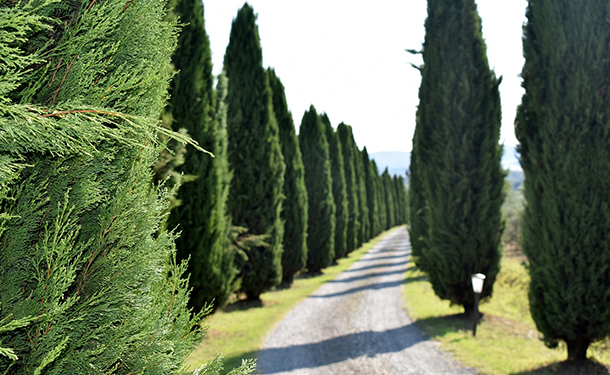
3. Cypress (Cupressus)

Small landscape trees for tiny yards include cypress

This evergreen tree species’ foliage is scale-like (2–6 mm long), arranged in opposite decussate pairs, and persists for three to five years. The leaves are more needle-like but have a lush, full appearance on young trees up to two years old.

Mature Height – This species reaches 40 to 60 feet, with a 20 to 25-foot spread
Hardiness Zone – 4 through 10
Species Type – Evergreen
Features – While tall, this species has a compact, dense spread, making them ideal for privacy screens in landscapes with limited available space.
Care Tip – Plant your cypress away from other shade trees or structures that may give them partial shade. Prune this species sparingly (hire a professional tree service when pruning is necessary).

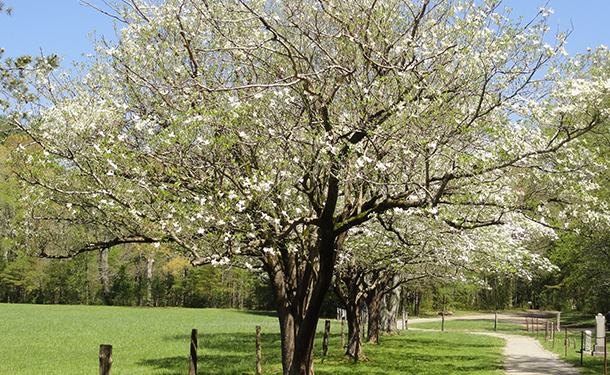
4. Flowering Dogwood (Cornus florida)

Small landscape trees for tiny yards include flowering dogwood

Flowering dogwoods are shrubs or small, low-branched trees typically with a flat-topped crown, oval or ovate leaves, and creamy-white flowers with 4 petals each appearing in early spring.

Mature Height – This species reaches 20 to 30 feet, with a 25 to 30-foot spread
Hardiness Zone – 7 through 9
Species Type – Deciduous
Features – Flowering Dogwood is among the most beautiful eastern North American trees with attractive early spring flowers, red fruit, and scarlet autumn foliage.
Care Tip – Plant your flowering dogwood in well-drained, moist soil. Amend the soil with organic material for the best growth.

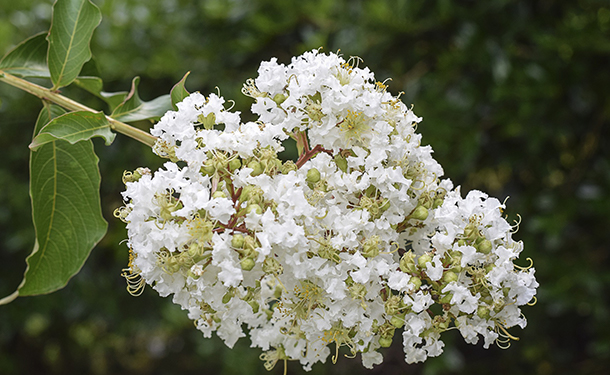
5. Crape Myrtle (Lagerstroemia)

Small landscape trees for tiny yards include crape myrtle

Crape myrtles are deciduous, small to medium-sized shrubs or small trees with full, moderately dense foliage, often appearing as multi-stemmed trees. Crape myrtle’s showy flowers have wrinkled petals like crepe paper. The foliage is dark green changing to yellows, oranges, and reds in fall.

Mature Height – This species reaches 4 to 20 feet, with a 6 to 15-foot spread
Hardiness Zone – 7 through 10
Species Type – Deciduous
Features – Spectacular spikes of pink, purple, white, and red flowers top their branches for months in summer. Unlike other flowering tree species, crepe myrtles can bloom all summer.
Care Tip – Crape myrtle flowers on new seasonal growth. Prune during the dormant season (late winter to early spring) before growth resumes. Avoid pruning in early fall before the first frost (pruning encourages new growth and keeps the tree from going dormant). Severe freezes can kill the plant if it is not fully adapted and dormant.

Small Trees

In this article, you discovered species, growing, and care information about 5 small tree species that fit nicely in tiny or limited yard space.

Planting small trees with limited yard space will allow you to benefit from the tree’s beauty and shade, while helping your yard resist erosion and increase your home’s curb appeal.

Selecting larger (overstory) trees for a tiny yard can result in a buckled driveway, pathway, sidewalk, or foundation from invasive roots seeking water and nutrients.

Sources:
plants.ces.ncsu.edu/plants/acer-palmatum/
hgic.clemson.edu/factsheet/crabapple/
apps.cals.arizona.edu/arboretum/taxon.aspx?id=310
uky.edu/hort/Flowering-Dogwood
extension.uga.edu/publications/detail.html?number=C944

For the original version of this article visit: https://www.thetreecareguide.com/5-small-landscape-trees-for-tiny-yards/

Fig Tree Care

Keep your fig tree from wilting and prematurely dying. Knowing how to properly care for a fig tree will help it mature to its full size and bear multiple delicious fruit crops.

Caring for fig trees includes giving them light water soil and fertilizer

thetreecareguide.com gathered essential species, planting, and care information for indoor and outdoor fig trees.

Fig Tree Description

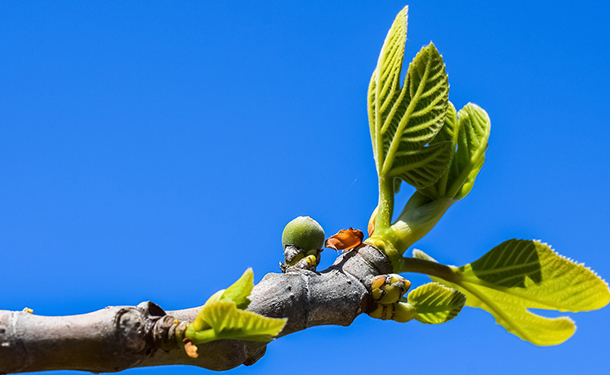
The common fig (Ficus carica) is typically a small tree or large shrub in the mulberry (Moraceae) family with attractive leaves and delicious edible fruits.  This deciduous tree grows to a mature size of 10 to 30 feet tall and wide quickly.

Note: The Latin name Ficus translates as “edible fig,” and the species Carica refers to the Caria region in Asia known for growing figs.

Planting Fig Trees Outside

Plant in full sun or partial shade in rich, moist, well-drained soil. Fig trees grow best in zones 8 through 11 but can be grown in zone 7 if planted in a sheltered space. When planted in zone 6, your fig tree may need to be grown in a pot and overwintered inside. This species grows well in containers, but container-grown trees must be overwintered indoors.

Soil Preference – Most fig trees flourish in all types of well-drained soil with a 6 to 7.5 pH. Adding eggshells to the soil provides calcium carbonate, phosphorus, magnesium, silicon, and sodium, all of which will help your fig tree grow better.

Watering – Fig trees need 1 to 1 1/2 inches of weekly water. Check the tree’s foliage; if it starts turning yellow and falling, it’s a sign that your tree needs to be watered. Keep the soil moist but not soaked (around the trunk, extending out to the tree’s dripline). Adding a 2 to 3-inch layer of mulch around the tree can help retain moisture and moderate soil temperature.

Fertilizing – Your fig tree should be fertilized in late winter (before the growing season) and again in late summer. Your fig tree will be prone to diseases and will likely produce fewer fruits if you don’t feed it regularly with the right type of feed.

Use a fertilizer made for fruit trees or an all-purpose 8-8-8 or 10-10-10 fertilizer containing a balance of 8 % or 10% N (nitrogen), P (phosphorus, and K (potassium).

Pruning – You should keep pruning activities in mind from planting your fig tree. Avoid pruning in the spring and fall to prevent fungal infection, and consider the following best practices:

Caring for fig trees includes seasonal pruning

  • Prune your fig tree in its first year
  • Prune your tree again during the tree’s first winter
  • Continue pruning your tree each year
  • Select branches to keep as fruiting branches
  • Prune out any storm-damaged branches
  • Always use sanitized pruning shears
  • Prune away any “secondary” branches
  • Prune away odd growth and suckers

Tip: Cut back the main fruiting branches by one-third to one-quarter. This helps the tree put more energy towards bearing next year’s fruit, which promotes a more extensive and sweeter crop.

Fruit – Fig Trees typically fruit within the first two to three years after planting. Planting a grafted fig tree may result in fruit within the first year.

Ficus carica fruiting habits

Planting Fig Trees Indoors

A single, good-sized tree can easily serve as the centerpiece for a room, while it would take several smaller plants to create the same impact. You can acquire a young tree and keep it pruned to control its size if you have a smaller space. Ficus trees can easily reach ten to fifteen feet indoors or larger if you have high ceilings and sufficient light. Consider the following when growing a fig tree indoors:

Light – Fig trees are tropical plants and require ample bright, indirect sunlight when grown indoors. Most fig trees will thrive in an east-facing window (direct sun in the morning and indirect sunlight for the rest of the day).

Soil and Potting – Well-drained soil is fundamental for keeping a potted fig tree healthy. Select a pot with drainage holes that’s about two to three inches larger than your fig tree’s root ball. Use light, fast-draining soil so your tree’s roots won’t sit in water. 

Watering – Fig trees do not like being overwatered. Water your tree when the top three inches feel dry to the touch.

Fertilizing – Indoor fig trees need the proper nutrient balance to grow healthy roots, strong trunks, and beautiful foliage. Fertilize regularly during late winter and late summer with an 8-8-8 or a 10-10-10 balanced fertilizer.

Fruiting – If you want to grow edible figs indoors, plant the Negronne fig (self-pollinating variety). Otherwise, you’ll need two trees or manual pollination.

Note: Container-grown fig trees usually fruit within five years of planting and proper care.

Caring for fig trees includes giving potted ficus caricas well drained soil

Ficus Carica Planting and Care

In this article, you discovered species, planting, pruning, and care information for growing indoor and outdoor fig trees.

Understanding the best conditions for your fig tree’s growth will help you keep it healthy, thriving, and fruiting.

Ignoring planting, watering, fertilizer, and light requirements for fig trees will leave them wilting, dying, and unable to produce fruit.

Sources:
plants.ces.ncsu.edu/plants/ficus-carica/
public.asu.edu/~camartin/plants/Plant%20html%20files/ficuscarica.html
atlas.uwa.edu/Plant.aspx?id=2677

For the original version of this article visit: https://www.thetreecareguide.com/fig-tree-care/

How to Fertilize Trees

Need help determining when and how to fertilize your trees? Keeping your trees adequately fertilized will help them reach maturity, thriving and healthy.

Fertilizing trees can be done by hand

thetreecareguide.com gathered the following essential information and tips to help keep your trees properly fertilized and flourishing on your property.

When Should I Fertilize My Trees?

When fertilizer is required, it should be applied sometime between late fall through early spring. Fertilize after the first hard freeze in October or November but before the soil freezes in December for the best results. During this window, soil temperature still allows roots to absorb minerals (stored for growth the following spring).

Fertilizers applied during winter (when the ground is frozen) may be lost to leaching, surface erosion, or runoff. Early March or April (before new growth begins) is another excellent time to fertilize trees. Fertilizing during summer months may stimulate late growth that cannot harden before being damaged by freezing fall and winter weather. Consider the following signs when deciding to fertilize your trees:

  • (Nitrogen Deficiency) Yellowing or chloritic older leaves
  • (Iron Deficiency) Iron chlorosis is typically a soil pH problem. Iron is less available when the soil pH is above 7.0
  • (Magnesium Deficiency) Chlorosis of older leaves and short, unhealthy new growth

Other conditions causing chlorosis include:

  • Poor soil drainage
  • Over-watering
  • Improperly or over-mulching
  • Planting too deeply (burying the root flare)
  • Root nematodes
  • Root injury (lawnmower, foot traffic, soil compaction, etc.)

Tip: Newly planted trees should only be lightly fertilized (or not at all) until they are well-established. After their first growing season, young, rapidly growing trees should be fertilized to promote their establishment and support their growth. Mature, well-established trees may only require fertilization every other year to maintain healthy foliage, color, and vigor.

There is a difference between fertilizers and amendments. Fertilizers provide trees with essential nutrients (soluble salt compounds), affecting plant health and growth. Soil amendments indirectly affect trees by improving soil structure and its ability to store and deliver water and nutrients.

Fertilizer Application Methods

These are various methods to fertilize trees that are deficient:

Liquid Root Feeding – Commercial tree and landscape services often use this application method. Nutrients are dissolved in water and soaked into the soil.

Foliar Application – Trees can absorb nutrients through their foliage. Multiple liquid fertilizer brands attach to a garden hose for foliar application. Foliar fertilization is an excellent way to compensate for chelated iron in trees suffering from iron chlorosis. Large shade trees are not typically fertilized using this method.

Fertilizing trees is often done with foliar application

Tip: When using foliar fertilizer application, follow the manufacturer’s directions on the label is crucial. Excessive fertilizer concentrations (especially when applied during hot periods can burn the tree’s foliage).

Surface Broadcasting – The easiest, most used, and most cost-effective way to fertilize large trees is to broadcast granular fertilizer on the soil surface. Broadcast the fertilizer on the area under the tree (beginning near the trunk and radiating out to the drip line). Irrigate the area well after fertilizing (if rainfall is not expected).

Tip: Avoid fertilizing if heavy rain is forecasted or the ground is still frozen.

Fertilizer Spikes – This is a popular method used by property owners. Spikes made from compressed fertilizer are hammered into the soil, and this method works best when the soil is soft and moist.

Tip: Follow the manufacturer’s instructions on the product label for correct spacing and quantities.

What is the Best Fertilizer for Trees?

Fertilizing trees can be done with sprays granules and powders

Turf fertilizers typically work well for trees because they contain the desired ratio of nitrogen, phosphorus, and potassium. Some of that nitrogen is slowly released to the roots.

Mulching a tree’s root zone with organic mulch (hay, bark chips, pine needles, etc.) helps regulate soil moisture and temperature while slowly releasing nutrients to the soil as it decomposes.

Tip: Working or gently tilling compost into the soil will enrich it but adds more soil structure than nutrients.

Do Trees Really Need Fertilizer?

Yes. Fertilizer helps trees grow and remain healthy. Trees are resilient, but soil nutrient deficiencies can cause their decline. Fertilization gives trees vital nutrients, supports their growth, and significantly contributes to tree health and vitality.

Note: In forested land, fallen leaves accumulate and decompose, recycling nutrients naturally occurring in the tree’s habitat. Fertilization attempts to compensate for nutrients taken from a tree’s root zone by leaf removal.

Can Trees Be Over-Fertilized?

Yes. Tree roots exert force to extract water and nutrients from the soil. Excessive fertilization causes them to shrivel, making it challenging to adequately perform their task. Root rot and disease susceptibility can also occur. Over-fertilization symptoms include the following:

  • Fertilizer “crust” on the soil surface
  • Yellowing, drooping, and wilting of lower foliage
  • Browning leaf tips and margins
  • Defoliation
  • Slow or no growth

Tip: The best way to solve an over-fertilization case is to leach excess nutrients from the soil. Excessive watering can slowly flush out the site. You can also remove dying or wilting foliage to reduce fertilizer remnants in the tree itself.

Fertilizing Trees

In this article, you discovered crucial information and tips for properly fertilizing your landscape trees, helping them stay healthy and resist insect infestation and disease.

Knowing when and how to fertilize your trees will give them the nutrients needed for excellent growth and supercharge their natural resistance to invasive insects and debilitating pathogens.

Under-fertilizing or over-fertilizing trees can severely damage their root systems, leaving them in decline, causing damage when they fall on your property.

Sources:
extension.missouri.edu/publications/g6865
extension.umd.edu/resource/fertilizing-trees-and-shrubs-and-nutrient-deficiency-symptoms
mgeldorado.ucanr.edu/files/170168.pdf

For the original version of this article visit: https://www.thetreecareguide.com/how-to-fertilize-trees/

Yew Tree Care, Toxicity, and Mythology

Avoid unwittingly planting a tree that is lethal to grazing wildlife, pets and people. Knowing the danger of planting yew trees on your property will help you decide if the risk is worth the threat.

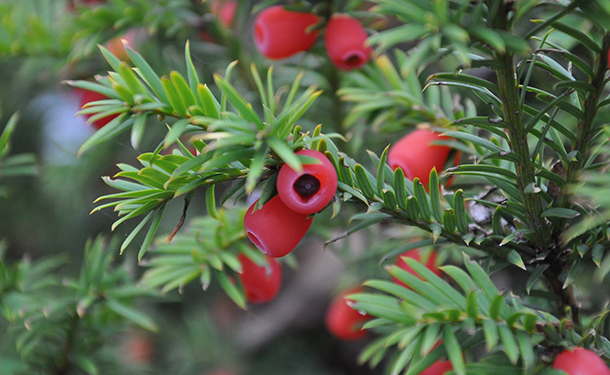
Yew trees are densely branched fruiting evergreens

thetreecareguide.com gathered essential care information, toxicity warnings, and some of the mythology associated with the yew tree species.

Yew Tree Species Information

Yews (Taxus baccata) are densely branching, evergreen trees with a large trunk reaching 20 to 30 feet tall. The bark is thin, scaly, and brown; it comes off in small flakes. Its leaves are dark green, leathery, and narrow with a pointed tip.

Yew can be grown in full sun, partial shade, and full shade. For healthier and more lush growth, however, choose a spot that gets several hours of daily sun. Too much shade can result in thin or irregular growth.

This species can live 400 to 600 years, with some specimens exceeding this lifespan. Consider the following when selecting and preparing a growing location for your yew tree:

Soil Preference – This species thrives in rich, loamy, well-drained soil with a neutral to slightly alkaline soil (5.0 to 8.0 pH).
Watering Needs – Established yews require minimal watering. However, during drought conditions, weekly watering is recommended. Adding a layer of mulch around the tree’s base will help retain moisture in well-drained soil.
Fertilizing Yews – Yew trees under 15 years can be fertilized each spring. More mature trees will benefit from feeding every other year. For best growth results, apply a “20-15-15” granular or liquid fertilizer around the yew’s drip line, avoiding the area immediately around the trunk.
Pruning Requirements – This evergreen species is typically pruned twice a year, once in early July and again in early September. Up to 2/3 of new growth can be safely removed to shape this tree during the July pruning. The fall pruning should be a light touch-up to even out any secondary growth.
Hardiness Zone – 3 through 8

Note: Taxus baccata is widely grown in landscapes for decorative purposes or privacy screening, and the species responds well to pruning.

Yew Winter Care

Yews planted in the right conditions can tolerate cold winters without protection. However, they can experience severe winter burn and bleaching. These conditions can be prevented by planting your yew trees on the north-facing side of buildings.

Note: Winter burn occurs when needles and branches repeatedly freeze and are then heated by the winter sun. Read more about protecting your yew during winter weather.

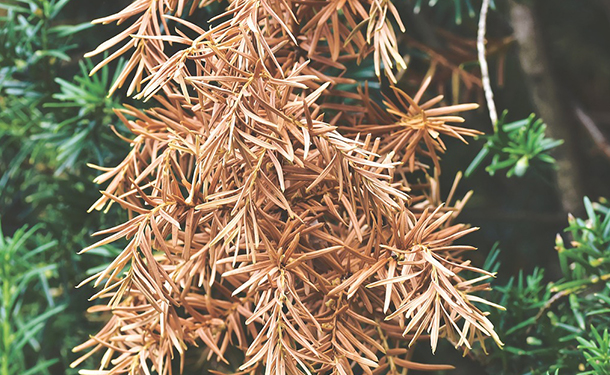
Yew trees need protection in cold weather

Yew Toxicity

Taxus baccata is a well-known poisonous tree species; all yew parts are deadly poisonous, except for the berry’s flesh. Eating a small quantity of leaves can be fatal for wildlife, livestock, and humans. Yew leaf toxicity is due to alkaloids known as taxines, of which taxine B is suspected as being one of the most poisonous.

Note: Taxine alkaloids are absorbed through the digestive tract incredibly fast, and poisoning signs (nausea, dry mouth, vomiting, stomach pain, dizziness, weakness, nervousness, heart problems, etc.) manifest themselves after 30 to 90 minutes. No antidote is known.

Yew Mythology

The following are some incredible examples of how yews have been embraced by and influenced cultures over millennia:

In Celtic Culture – Old yew tree drooping branches can root and form new tree trunks where they contact the ground. Thus the yew came to symbolize death and resurrection in Celtic culture. The Celts would also have been familiar with the tree’s toxicity.

In Christian Lore – The yew, in particular, symbolizes nature’s power of renewal, the seasons’ cycles, birth and death, and new birth. Over time, the yew remained a symbol of eternity in Christianity. However, the words and focus were changed from ‘rebirth’ to ‘resurrection.’

In Norse Cosmology – The world tree “Yggdrasil” is a massive mythical tree connecting the nine worlds in Norse cosmology. Although typically translated as Ash, it is believed that this tree is likely to have been a Yew.

Ancient Warriors – In ancient times, yews were used for suicides during war times. Food and drink vessels made from yew wood could poison those who ate or drank from them.

The Druids – Yew is typically associated with the dead and is often found in graveyards. The Druids saw yew trees as the guardians of the deceased.

Yew trees were revered in druid culture as guardians of the dead

In Greek Mythology – Yew trees are associated with the Greek goddess Hecate, liberator of souls after death.

Note: For as poisonous as yew is, two chemotherapy drugs were developed from yew trees:

  • Docetaxel (Taxotere) was first made from the European yew tree’s needles
  • Paclitaxel (Taxol) was made from the Pacific yew tree’s bark

Fascinating how a tree so rooted in poison and death can provide treatment and hope for those with severe health concerns.

Yew Trees

In this article, you discovered species planting and care information, severe toxicity warnings, and some of the ancient mythology surrounding the Taxus baccata species.

Knowing the risks of planting a yew tree and how to minimize them will help you grow a stunning tree that can serve as a specimen tree, landscape tree, or privacy hedge.

Unwittingly planting a poisonous yew tree can lead to grazing wildlife, animals, livestock, or unsuspecting people being poisoned.

Sources:
extension.umn.edu/yard-and-garden-news/ask-extension-do-i-need-protect-my-yew-winter
plants.ces.ncsu.edu/plants/taxus-baccata/
heritagegarden.uic.edu/yew-taxus-baccata

For the original version of this article visit: https://www.thetreecareguide.com/yew-tree-care-toxicity-and-mythology/

7 Tree Care Tips for Property Owners

Need help keeping your trees from becoming hazards on your property? Understanding some basic tree care techniques will help prevent your trees’ sickness, destabilization, and death.

Crucial tree care tips for property owners include selecting tree species

thetreecareguide.com gathered some essential tips to help property owners give their trees the best care so they thrive and stay healthy well into maturity.

1. Tree Selection

When searching for the “perfect” tree, you’ll want to look for one with a straight trunk. Trees that grow into large shade trees should have a strong central leader (trunk) with branches evenly distributed around it. Consider the following when selecting a tree:

  • Size (knowing the mature height and spread of trees can prevent multiple landscape problems)
  • USDA Hardiness Zone (A crucial consideration when selecting trees is their cold hardiness)
  • Pest Susceptibility
  • Soil Requirements

Tip: Send a soil sample to your state’s university extension for testing. This will reveal the soil’s nutrient content and availability, pH value, microbial activity, etc. This test will guide you if any soil adjustments are needed for healthy tree growth.

2. Tree Planting and Location

Crucial tree care tips for property owners include digging a hole for planting

Trees can be planted anytime, as long as you can dig an adequate planting hole. If the ground is frozen, it’s better to wait for the thaw. Generally, the more time between planting a tree and the beginning of summer, the better (that makes fall the best time to plant new trees). Early spring is another popular planting time as well. Consider the following when planting your tree:

  • Dig the hole (2 to 3 times wider than the diameter of the tree’s rootball)
  • Massage, loosen, and trim the roots
  • Place the tree in the center of the hole
  • Fill in the hole
  • Build a wide soil berm (this will help when watering your tree)
  • Stake and tie the tree
  • Water the tree thoroughly
  • Add a 3-inch layer of mulch

Tip: Trees should not be too close to buildings or power lines, and you should consider where you want shade or wind relief around your property. Try to plant trees 15 to 20 feet away from buildings when possible. Evergreens and clumping trees are typically used along property lines (as privacy screens) and in windbreaks.

3. Watering Schedule

Crucial tree care tips for property owners include watering schedules

Newly planted trees require more frequent watering than established ones. They should be watered at their planting time and at the following intervals:

  • 1 to 2 weeks after planting, water daily
  • 3 to 12 weeks after planting, water every 2 to 3 days
  • After 12 weeks, water weekly until roots are established

The above is a great rule of thumb, but different trees and soil types require different watering patterns, so keep that in mind to ensure your trees are properly watered.

Note: Water thoroughly before planting, at planting time, and the day after planting. This helps settle the soil and eliminates large air pockets.

4. Why You Need to Mulch

Crucial tree care tips for property owners include how to properly use mulch

Tree care professionals prefer organic mulches, like wood chips, pine needles, hardwood and softwood bark, composted leaves, and other compost mixes. When these mulches decompose, they improve soil structure and increase soil fertility. Other benefits of proper mulching include the following:

  • Preserves soil moisture by increasing water infiltration and slowing evaporation
  • Significantly improves soil structure, fertility, and aeration as it decomposes
  • Efficiently moderates soil temperature, protecting roots from extreme summer and winter temperatures

Note: The most beneficial mulch options include wood chips, bark nuggets, composted leaves, or pine needles.

5. Seasonal Tree Pruning

Crucial tree care tips for property owners include proper seasonal pruning

Pruning can remove limbs and branches with a disease, fungi, and other decay, stopping them from spreading to healthier branches or the trunk. Removing these branches also exposes the others to more sunlight and air circulation, which helps reduce disease occurrence.

Note: Late winter is the best time to prune most trees. Trees are still dormant at this time of year, and, unlike early winter, wound closure will be rapid if pruning occurs just prior to the growing season.

6. Insect Pests and Diseases

Crucial tree care tips for property owners include how to handle insects and disease

Insect pests can be classified into three categories when regarding trees:

  • Chewing insects that eat portions of the tree (Japanese beetles, gypsy moths, tent caterpillars, etc.)
  • Sucking insects that suck sugars out of the tree’s stems and leaves (aphids and scales)
  • Boring insects that bore into the tree to eat portions of the inner bark or create nests. These insects cause the most damage to trees (Emerald Ash Borer, bark beetles, pine beetles, etc.)

Prevention: Apply insecticidal sprays in 2-week intervals before and during the growing season. However, insects can build up tolerance to even the best insecticide when used repeatedly. Alternate applying insecticides with different active ingredients.

Tree diseases, fungi, and viruses have three crucial factors: the host, the pathogen, and the environment (these make up the disease triangle). Consider the following:

  • The host is identified as the tree or plant in question
  • The pathogen is the disease, fungi, or virus
  • The environment is all the factors influencing the pathogen and host

Most tree species are susceptible to at least one disease-causing fungi. Yet, most fungi are beneficial to their host (only a few are harmful to trees).

Disease can be carried by vectors, most commonly insects. This is seen in dutch elm disease, where the bark beetle acts as a vector. Given there are a multitude of diseases, being able to properly identify the disease or pest that’s doing the damage will help you considerably in resolving your issue.

Prevention: Fungicides kill the fungi that cause many common tree diseases. Treatment methods may include tree spraying or fungicide injection into the truck, branches, or soil. Insecticides should also be considered, as many pathogens migrate on insect vectors.

7. Tree Fertilizing and Pulling Weeds

Crucial tree care tips for property owners include fertilizing and pulling weeds

When needed, the best time to fertilize is mid-spring (April or early May) or late fall once trees are dormant. The fertilizer should be spread evenly across the soil surface, and the amount of nitrogen applied should be 3 pounds per 1,000 square feet.

Note: Early spring growth depends almost entirely on nutrients absorbed and stored the previous year.

Tree Care Tips

In this article, you discovered tree planting and care tips to help you keep your trees healthy and strong as they grow and tower over your property.

Knowing what to do for your trees when planting them and as they grow will help you keep them thriving and prevent them from dying and falling on your property.

Not knowing the best ways to plant, care for, water, and trim trees leaves them vulnerable, and you responsible to spend money to have them removed.

Sources:
extension.umn.edu/planting-and-growing-guides/watering-newly-planted-trees-and-shrubs
csfs.colostate.edu/2018/02/20/late-winter-best-time-prune-trees-colorado/
ourcityforest.org/blog/2020/4/17/identifying-tree-pests-and-disease
canopy.org/tree-info/caring-for-trees/mature-trees/
arborday.org/trees/tips/

For the original version of this article visit: http://www.thetreecareguide.com/7-tree-care-tips-for-property-owners/